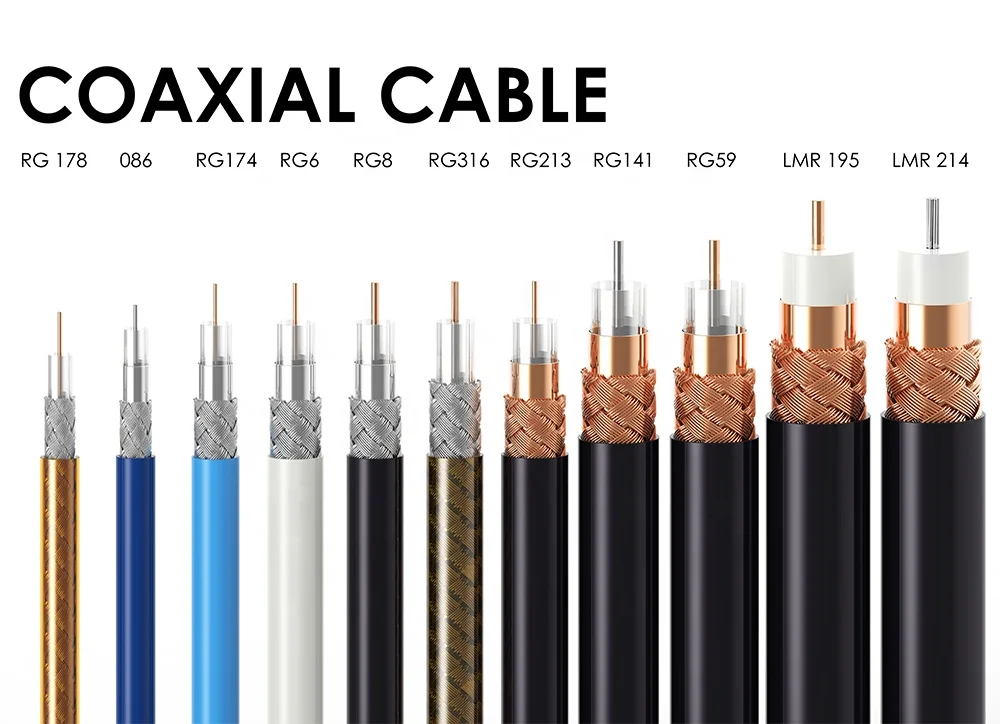

Introduction to Coaxial Cables
Coaxial cables, often referred to as "coax cables," are essential components in modern communication systems. These cables play a crucial role in transmitting signals across various applications, from television broadcasting to high-speed data networks. Let's delve into the fascinating world of coaxial cables, exploring their features, materials, and applications.
What Is a Coaxial Cable?
A coaxial cable consists of several layers, each serving a specific purpose:
Inner Conductor: At the core lies a conductive copper wire, acting as the central conductor. This wire carries electrical signals.
Insulation Layer: Surrounding the inner conductor is an insulating material, typically made of plastic. This layer prevents signal leakage and maintains electrical separation.
Shielding Layer: Next comes a thin, mesh-like conductive layer (usually copper or an alloy). This shielding provides protection against external electromagnetic interference (EMI) and minimizes signal loss.
Outer Jacket: The final layer comprises an insulating material, often rubber or plastic. It shields the cable from physical damage and environmental factors.
Types of Coaxial Cables
Several coaxial cable types exist, each tailored for specific applications:
RG-6: RG-6 is a popular coaxial cable used for cable television (CATV), satellite TV, and broadband internet. Its 75-ohm impedance ensures efficient signal transmission over long distances. RG-6 cables are commonly found in homes and commercial buildings.
RG-11: RG-11 boasts a thicker core conductor and greater shielding, making it ideal for longer cable runs. It's commonly used for CATV distribution networks and high-speed internet connections.
RG-59: RG-59 is another 75-ohm cable, but it has thinner conductors and less shielding. It's suitable for shorter cable runs, such as connecting TVs to antennas or security cameras.
RG-58: RG-58 is a versatile 50-ohm cable used in radio frequency (RF) applications, including amateur radio, Wi-Fi antennas, and Ethernet connections.
Applications of Coaxial Cables
Coaxial cables find diverse applications across various domains:
Broadcasting and Cable TV: RG-6 and RG-11 cables deliver TV signals from cable providers to homes. They ensure clear, high-quality reception.
Satellite Communications: Coaxial cables connect satellite dishes to receivers, enabling access to hundreds of channels.
Internet and Networking: RG-6 and RG-59 cables facilitate high-speed internet connections. RG-58 is commonly used for Ethernet connections in older networks.
Security Systems: Coaxial cables link surveillance cameras to recording devices, ensuring reliable video transmission.
RF Testing and Measurement: RG-58 and other 50-ohm cables are essential for RF testing equipment, oscilloscopes, and signal generators.
Conclusion
Coaxial cables are the unsung heroes of our connected world. Their robust design, efficient signal transmission, and versatility make them indispensable across industries. Next time you enjoy your favorite TV show or browse the internet, remember the silent workhorse-the coaxial cable-making it all possible.