
"Why should network cables be arranged in the order of white-orange, orange, white-green, blue, white-blue, green, white-brown, brown?" This is not useful information, but if you insist on delving into the engineering principles, we can discuss it. The arrangement of "white-orange, orange, white-green, blue, white-blue, green, white-brown, brown" is called the "568B standard." Its main purpose is to provide consistent connections between different network environments and devices.
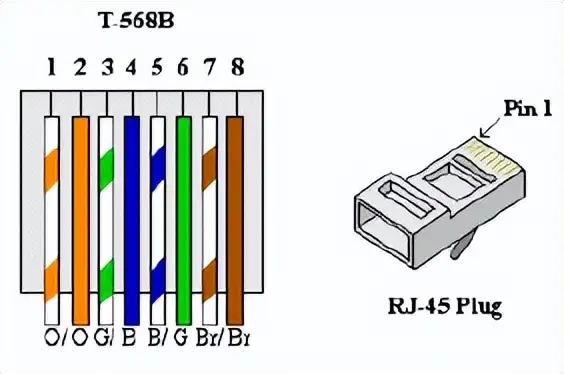
The wiring order of network cables is a "subset." Its color coding method comes from the 25-pair cable color code.
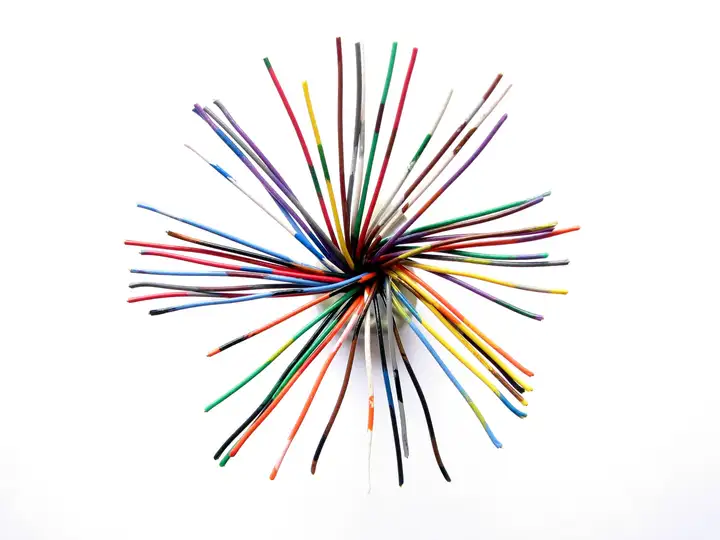
In earlier communication cables, a single cable contained 25 pairs of wires, which could meet the installation needs of 25 telephones. If the 25 pairs of telephones were not color-coded, connecting them correctly would be incredibly difficult. Hence, the 25-pair cable color code was developed. It is easy to remember: the sub-pair cables are marked as blue, orange, green, brown, and gray; the row cables are marked as white, red, black, yellow, and purple.
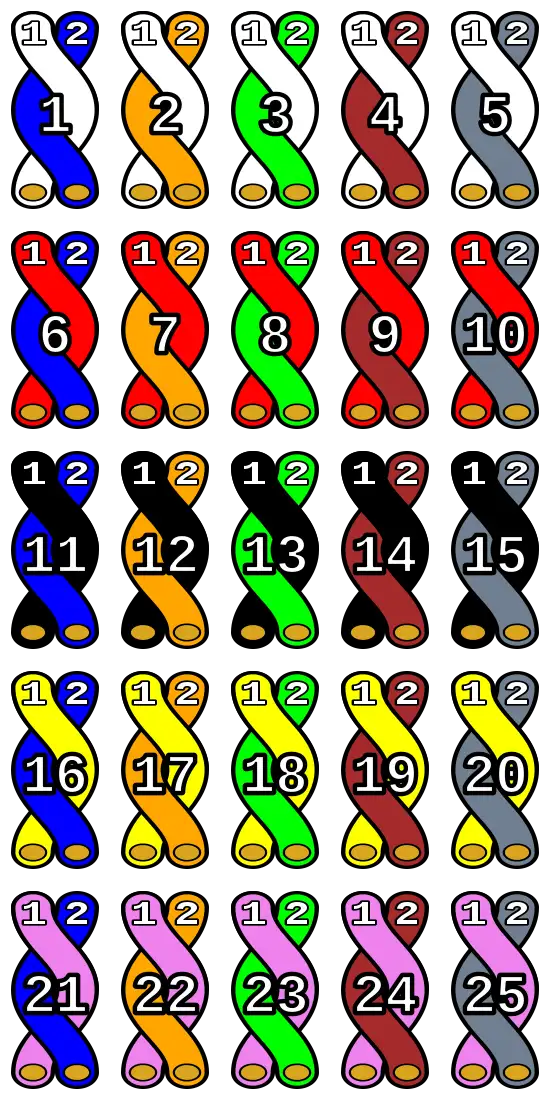
The four pairs of cables we use in Ethernet are the first four sub-pairs of the first row of this color code system. These are the commonly mentioned "orange, blue, green, brown." However, according to the 25-pair color code, shouldn't the first pair of wires be "blue"? Why did it become "orange"? This is where the original purpose of the 25-pair cable comes into play. Initially, the 25-pair cable was used as a telephone line, so the blue pair of wires in the first position was used for the telephone. After the RJ45 plug was designed, the middle position was also reserved for the telephone line. In the early days, the network plug RJ45 and the telephone plug RJ-11 only differed in width and the number of contacts, while other physical parameters were the same. RJ11 plugs could be inserted into RJ45 sockets.
Therefore, in the early network, the two contacts occupied by the telephone line, 4 and 5, were vacated. Contacts 1, 2, 3, and 6 were selected for network data transmission. In the early network, it was even possible to connect the lines of contacts 4 and 5 back to the telephone system, allowing a single 8-core network cable to be used for both network data and telephone lines. This practice seems makeshift now, but at the time, it was the optimal solution to the legacy problem. Therefore, the 12-contact pair also became the orange or green pair, and the brown pair was kept as a reserve on contacts 7 and 8. However, since 4 and 5 were occupied, the second required pair of wires for the network had to be split and occupy positions 3 and 6. Therefore, following the 568B standard, it became "white-orange, orange, white-green, blue, white-blue, green, white-brown, brown," or following the 568A standard, it needed to be connected as "green-white, green, orange-white, blue, white-blue, orange, brown-white, brown."
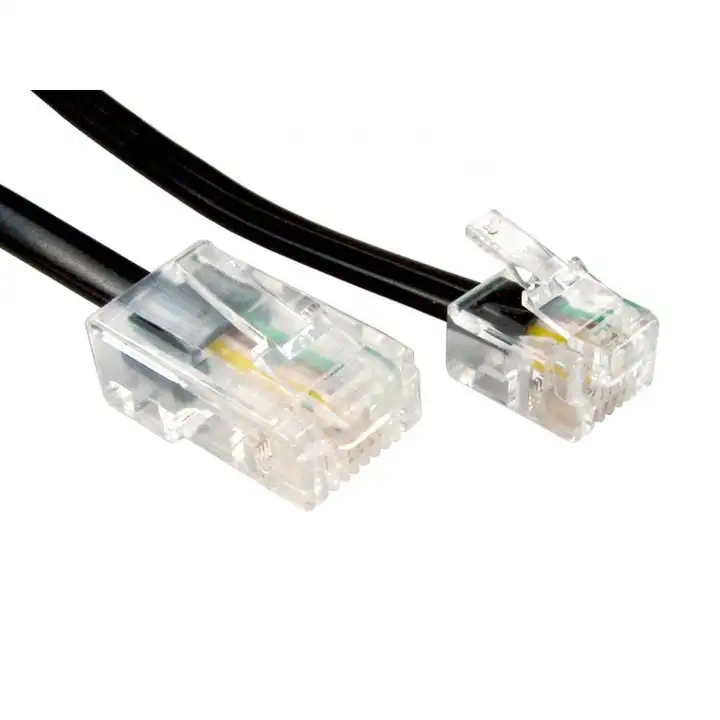
Is there an electrical design for this connection method? Yes, there is! If you directly connect the wires according to the order of the 25-pair color code, such as "white-orange, orange, white-blue, blue, white-green, green, white-brown, brown," the two ends of the connection will still correspond one-to-one in terms of physical parameters. However, this cable can only run a 10Base-Tx network signal of 10Mbps over a long distance. This is because to prevent signal crosstalk, the twisting distance of the four pairs of cables in the network cable we use is different.
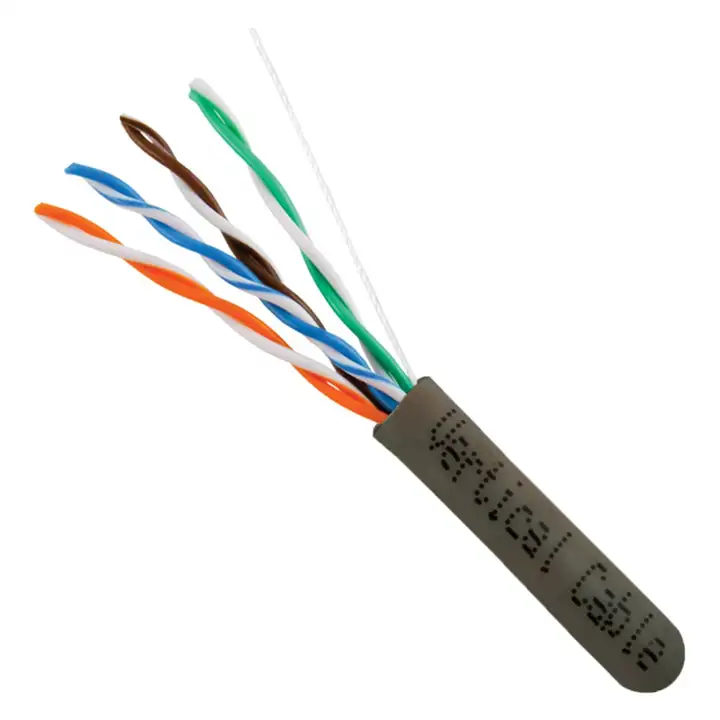
The twisting distance of the wire pairs is between three and five turns per inch. This is a method to eliminate crosstalk between the wire pairs. However, where does the energy used to eliminate crosstalk go? It mainly goes to the two empty wire pairs, 4 and 5. If the wires are connected in the order of "white-orange, orange, white-blue, blue, white-green, green, white-brown, brown," you will find that the lines on contacts 3 and 6 are originally divided into two different wire pairs for transmission. For example, the positive signal on contact 3 is assigned to the blue wire pair, while the negative signal on contact 6 is assigned to the green wire pair. At this time, the differential signal loses its crosstalk elimination capability. It does not have a significant impact over extremely short distances, but once the length of the network cable exceeds 3-5 meters, the problem of being unable to eliminate crosstalk becomes apparent. Therefore, it is not advisable to connect the wires randomly.
What if one of the wire pairs in the network cable is swapped? For example, the original "white-orange-orange" is changed to "orange-white-orange," and the rest remains the same. Here, we are again faced with the problem of interference between wire pairs. Originally, the wire order "+-+-+□□-□□" becomes "-++□□-□□." In this way, there is no problem with the crosstalk between the wires when the network cable is transmitting, but it is not advisable. The reason is simply that it does not conform to the standard. It does not have as significant an impact as the previous misconnection. It will only cause unnecessary trouble for network maintenance personnel in the future.
These are all transmissions and receptions of hundred-megabit signals. When it comes to gigabit signals, all eight wires in the network cable are utilized.
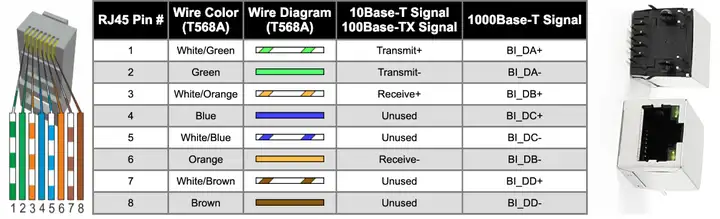
At this point, the wire pairs are divided into DA, DB, DC, and DD. In 10000Base-T signals, the signal modulation method is also changed from MLT-3 used in the previous hundred megabits to 4D-PAM5. Here, 5 represents five levels of oscillation states:
-2, -1, 0, 1, 2
This is much finer than the level distinction of MLT-3 in a hundred megabits. It is not as simple as increasing the clock oscillation by 10 times from 100Mbps to 1000Mbps.
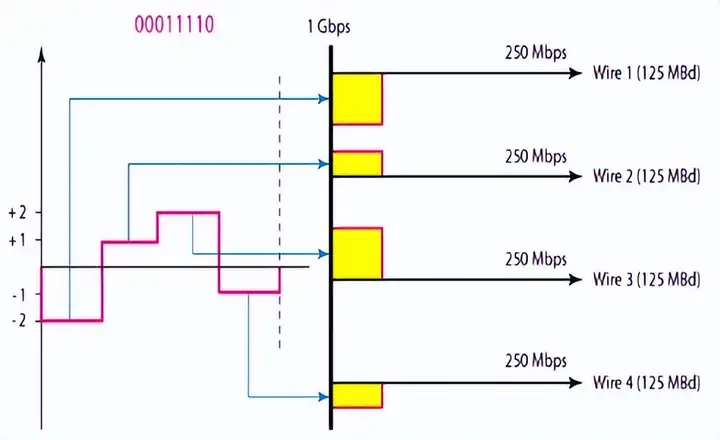
When it comes to ten-gigabit networks, the modulation method is changed to 16QAM, which is a calculation method of the empty circumferential matrix.
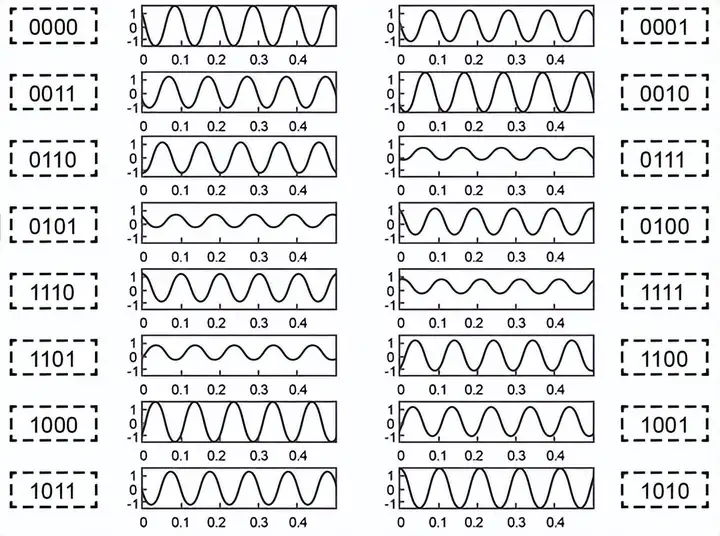
There are not only changes in the frequency cycle and the corresponding relationship of the coding but also differences in the oscillation phase. In terms of the arrangement of the network cable wire order, everyone is using the existing design from decades ago to achieve more advanced functions. This is a helpless move to inherit the legacy. If the issue of "inheriting the legacy" is not considered, the industry has long introduced technologies similar to single-pair Ethernet (SPE).
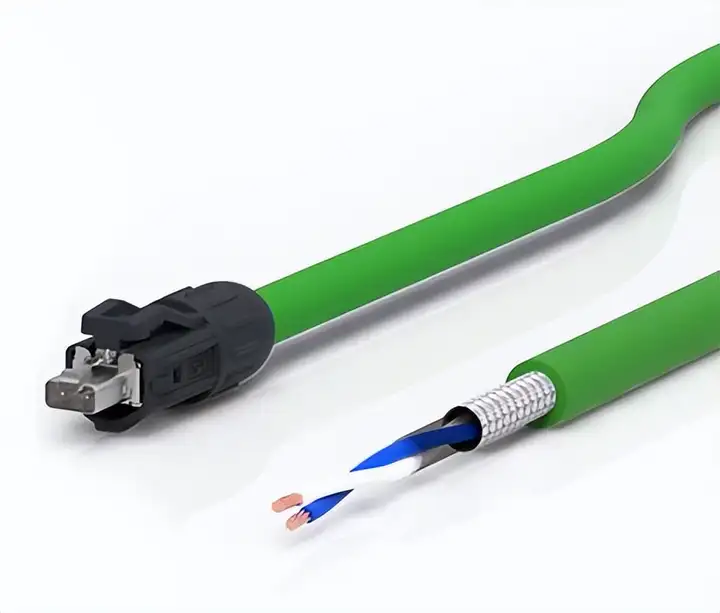
Even a single pair of cables does not have a specific wire order. (If you look closely, the color of the wires has returned to blue-white-blue.) There is no problem even with a bandwidth of tens of thousands of megabits. However, looking back at the desktop computers, laptops, game consoles, routers, and other devices in our hands, none of them support this type of interface. We can only look at it with envy. The real application of SPE is just starting in industrial networks, after all, the device interconnection owner and manufacturer have a greater say.